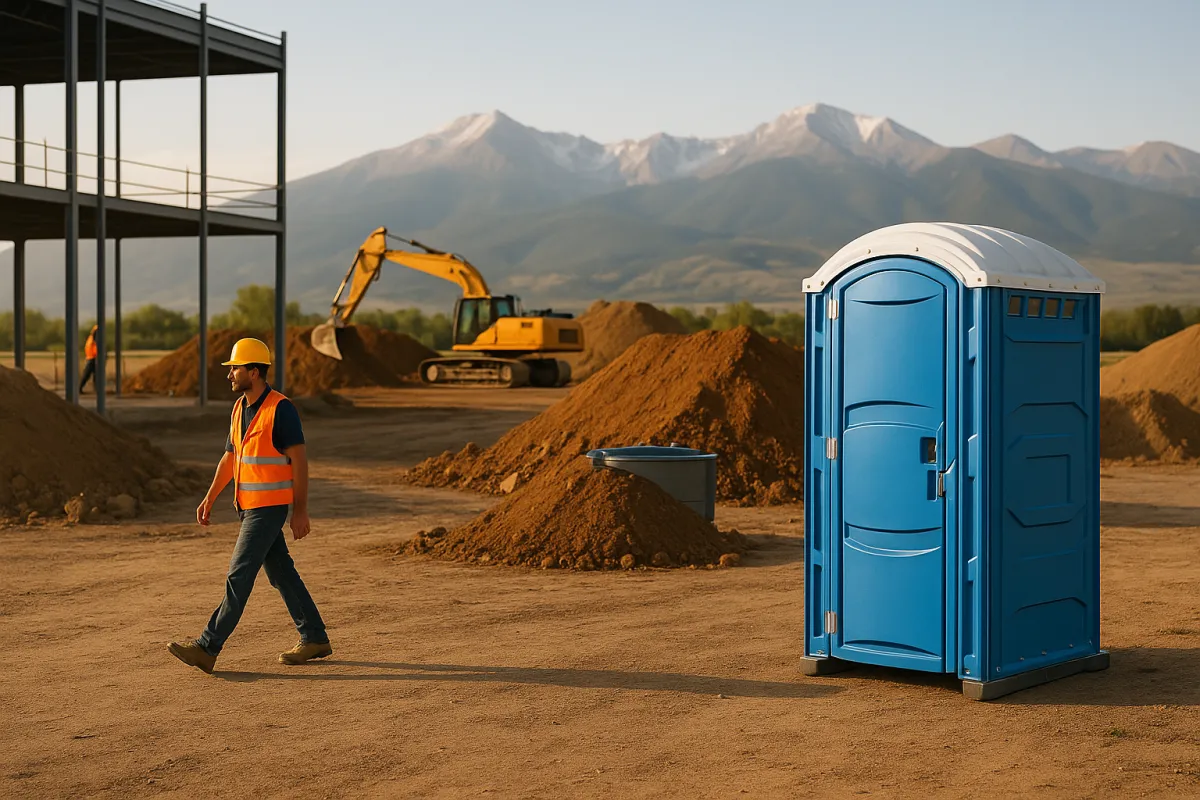
Colorado Construction Porta Potty Requirements: OSHA Rules & Ratios
Colorado Construction Porta Potty Requirements
If you’re managing a construction site in Colorado, providing the right number of portable toilets isn’t optional—it’s required by OSHA and directly impacts jobsite safety, productivity, and compliance.
Why Construction Porta Potty Compliance Matters
Costly fines and failed inspections
Worker complaints and lost productivity
Delays that slow down your entire project
This guide breaks down exactly what’s required, including OSHA toilet ratios, Colorado-specific considerations, and how to stay compliant on any size jobsite.
If you’re also trying to budget your project, you can review typical pricing in our
👉 Colorado porta potty rental cost guide
By following the proper worker restroom regulations, construction managers can:
Prevent the spread of illness and improve workplace hygiene
Promote employee comfort and productivity
Minimize disruption caused by regulatory fines or shutdowns
This guide is designed specifically for:
Colorado construction managers
General and subcontracting contractors
Site safety supervisors
Office-based project planning teams
We’ll cover:
Federal OSHA standards for porta potties
Specific construction restroom guidelines in Colorado
Porta potty quantity and selection
Manager responsibilities and compliance enforcement
Let’s explore each area to ensure your site meets all 2024 requirements.
Get an accurate estimate for your jobsite in under 60 seconds
Pricing depends on crew size, duration, and location—answer a few quick questions to see what to expect in your area.
Why Restroom Regulations Matter on Construction Sites
Worker restroom regulations are critical not just for compliance—but for worker satisfaction, health, and your project's success.
Key reasons to meet jobsite toilet requirements:
Health Protection: Workers need clean, accessible toilets to reduce the spread of germs. Contaminated facilities can contribute to illness and time off work.
Productivity: Morale drops when workers can’t use the restroom comfortably. Delays from traveling off-site to relieve themselves can waste significant time.
Legal Compliance: Failing to provide adequate restrooms can result in OSHA fines, complaints, and potential work stoppages.
Reputation Management: Clean and well-maintained facilities reflect your commitment to safety and professionalism.
According to experts, construction sites must treat restroom access as a safety issue, not an afterthought.
Overview of OSHA Porta Potty Requirements
The OSHA porta potty requirements fall under regulation 29 CFR 1926.51(c). These federal rules set the national standard for sanitation on construction sites.
View official OSHA construction restroom requirements
OSHA Toilet Ratio for Construction
The law mandates the following ratios based on workforce size:
1–20 Workers: At least 1 toilet
21–200 Workers: 1 toilet and 1 urinal per 40 workers
201+ Workers: 1 toilet and 1 urinal per 50 workers
Quality and Design Requirements:
All restroom units must:
Be clean and sanitary
Have privacy partitions and doors
Include adequate lighting and ventilation
Offer gender-inclusive signage where applicable
Contain hot, cold, or warm water, cleaning agents, and drying options
Approved Toilet Types:
OSHA allows four toilet types:
Privies (non-flush pits)
Chemical toilets
Recirculating toilets
Incinerating or combustion toilets
These units must be maintained and serviced regularly.
See OSHA's Restroom Sanitation Guidelines for More Info
Colorado-Specific Construction Restroom Guidelines
When following construction restroom guidelines Colorado laws, you must meet both federal OSHA rules and state- or locally-enforced enhancements.
Who Enforces Compliance in Colorado?
CDOSH: The Colorado Division of Occupational Safety and Health oversees construction site sanitation.
CDPHE: The Colorado Department of Public Health & Environment handles health monitoring and may inspect facilities.
Municipal Codes: Cities like Denver and Colorado Springs have their own requirements.
Key Local Requirements:
Restrooms must be ADA-accessible if your site includes workers with mobility disabilities.
Toilets must be within a 10-minute walk from any working area.
Restrooms cannot be placed near storm drains, water runoff paths, or food prep areas.
Always check with your local building authority for jurisdiction-specific rules.
How Many Porta Potties Are Required on a Colorado Construction Site?
These OSHA restroom ratios apply to all active construction sites in Colorado, including commercial, residential, and roadwork projects.
These construction site toilet requirements in Colorado apply to all construction job sites, including commercial builds, residential projects, and roadwork crews.
According to OSHA standard 1926.51(c)(1), which governs construction site sanitation requirements construction job sites must provide adequate portable toilet facilities:
• 1 toilet for every 15 workers when there are 20 or fewer employees
• For larger crews, additional units must be added proportionally
• Units must be maintained in sanitary condition with regular servicing
Key Compliance Rules
• Weekly servicing is the minimum industry standard
• Sites without weekly service may require additional units
• Cold weather jobsites may require insulated or heated units
• Units must be readily accessible to all workers
Failing to meet OSHA restroom requirements can result in jobsite violations and fines.
Meeting jobsite toilet requirements starts with calculating the right number of restrooms for your team size and layout.
Example:
A 50-worker construction site in Colorado typically requires at least 2 toilets and 2 urinals under OSHA guidelines, but many contractors add an extra unit to reduce wait times and improve productivity during peak hours.
OSHA-Compliant Minimum Toilet Ratio for Construction Sites:
> OSHA recommends placing toilets no more than a 10-minute walk from active work zones.
Want to estimate your jobsite cost?
👉 See real pricing, delivery fees, and what contractors in Colorado are actually paying in our porta potty rental cost guide
Additional Recommendations:
Include ADA-compliant units for sites with diverse workers.
Add hand-washing stations near every cluster of toilets.
Choosing the Right Porta Potties for Construction Sites
The term porta potties for construction sites includes several unit types optimized for different teams, site sizes, and durations.
In Colorado, weather conditions and jobsite demands often determine which units you actually need:
👉 Heated restroom trailer rentals for winter durability and comfort
👉 Winter porta potty rentals in Colorado for snow-ready jobsite setups
Types of Porta Potties:
Standard Unit: Best for general construction job sites with smaller crews.
ADA-Compliant Unit: Required for inclusivity; includes larger doors, ramps, handrails.
High-Capacity Setups: Needed on remote or high-traffic long-term projects.
Combo Units: Include internal sinks or sanitation gel stations.
Key Rental Considerations:
Durability: Units must resist wear from tools, dust, and weather.
Servicing Frequency: Higher-headcount sites may require daily (or twice daily) service.
Waste Disposal: Ensure vendors follow legal and environmentally safe disposal methods.
Winterization: Heated, insulated, and snow-proof units are crucial during Colorado winters.
Where to Place Them:
High-traffic, yet away from food or rest zones
Grouped units near crew areas or distributed basedonworkforce spread
Accessible by service trucks for restocking and cleaning
Meeting Colorado Construction Portable Toilet Regulations
Staying compliant with construction portable toilet regulations in Colorado isn’t just about meeting OSHA minimums—it’s about maintaining a safe, efficient, and inspection-ready jobsite at all times.
Failure to comply can result in:
Jobsite violations and fines
Delays during inspections
Reduced worker productivity and morale
To avoid these issues, site managers should take a proactive approach to restroom planning, placement, and maintenance.
Responsibilities of Site Managers
To ensure your jobsite remains compliant throughout the project, follow these best practices:
Create a service schedule that outlines cleaning and maintenance frequency based on crew size
Keep detailed service logs to document when units are cleaned, restocked, and inspected
Confirm ADA compliance when required for public-facing or larger job sites
Monitor unit conditions daily to ensure cleanliness, functionality, and accessibility
Adjust unit count as crews scale to remain within OSHA guidelines
Best Practices for Staying Inspection-Ready
Beyond minimum requirements, experienced contractors in Colorado typically:
Schedule at least weekly servicing, increasing frequency for high-traffic sites
Place units within easy walking distance of active work areas
Add hand washing stations near restroom clusters for improved hygiene
Use heated or insulated units during winter months to prevent freezing and downtime
Planning Ahead for Your Jobsite
Proper planning ensures you’re not scrambling to add units or fix compliance issues mid-project.
If you’re estimating your jobsite setup, it helps to understand:
How many units you’ll need based on crew size
How servicing frequency impacts cost
What type of units make sense for your environment
👉 For a full breakdown of pricing, delivery, and what to expect, see our
Colorado porta potty rental cost guide
Worker Restroom Regulations: What Employers Must Know
Compliance with worker restroom regulations is more than a rule—it's part of responsible site management.
Employer Obligations:
Follow OSHA ratio: Calculate toilets per worker using 29 CFR 1926.51(c)
Restock supplies: Ensure there’s always soap, toilet paper, and hand towels
Keep restrooms clean: Sanitize units frequently (daily or basedonusage)
Meet distance rules: No more than a 10-minute trip to access
Maintain accessibility: Provide and monitor ADA units if needed
Keep proof: Logs of cleaning/service dates protect your business
Common Mistakes:
Underestimating number of workers
Delaying vendor servicing
Overlooking ADA regulations
Ignoring city-specific rules
Regulatory Risks:
OSHA sanitation citations
Fees ranging from hundreds to thousands of dollars per violation
Project delay from suspension of inspections or permits
Lawsuits from unaccommodated or unsatisfied workers
Colorado Construction Porta Potty Requirements
Following Colorado construction porta potty requirements isn’t complicated—but it does require careful planning. And the biggest benefits go beyond avoiding fines:
Protect worker health and dignity
Keep productivity high
Avoid costly project delays
Improve your reputation with clients and regulators
What to do next:
1. Assess your site: Consider current worker headcount, site layout, and climate
2. Check local laws: Contact county or city permit offices
3. Choose a quality vendor: One that understands Colorado regulations
4. Document a schedule: Include regular cleanings and paper supply checks
5. Train staff: Ensure your team understands restroom responsibilities
For complete compliance, consult both OSHA and CDPHE standards in full. Your investment in sanitation will return in smoother operations, happier workers, and successful inspections.
Get an accurate estimate for your jobsite in under 60 seconds
Pricing depends on crew size, duration, and location—answer a few quick questions to see what to expect in your area.
FAQ: Construction Site Porta Potties in Colorado
Compare: Colorado vs. High-Regulation States
By following the Colorado construction porta potty requirements, your jobsite remains clean, law-abiding, and worker-focused. Always consult local agencies and a trusted rental provider to stay ahead.
