Colorado Mountain Porta Potty Rentals
Portable toilet rentals in Colorado's mountain communities — Aspen, Vail, Breckenridge, Steamboat Springs, and beyond. What's different about mountain markets, how to book, and what to plan for.
Quick Answer
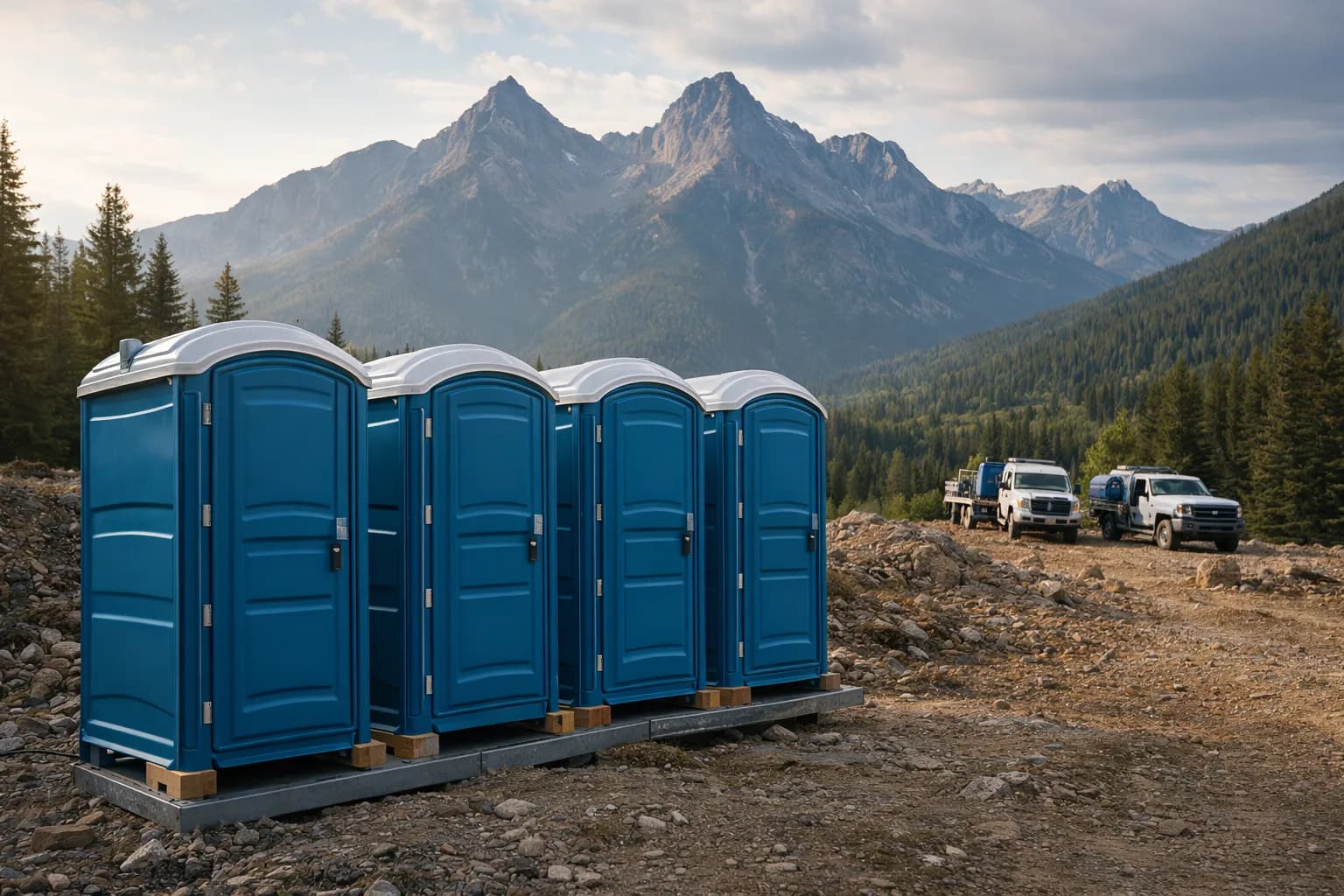
Mountain porta potty rentals work the same as Front Range rentals — but with smaller provider fleets, higher prices, access road constraints, and a compressed summer season. Book 6–10 weeks ahead for events; 3–6 months for mountain weddings and peak-season restroom trailers. Expect to pay a 20–50% premium over Front Range pricing due to delivery distance. Winterized units are essential for cold-season mountain construction. Confirm road access before booking any restroom trailer.
What Makes Mountain Porta Potty Rentals Different
Smaller provider fleets
Mountain communities have fewer providers and smaller inventories than Front Range cities. Demand concentrates in a short window. When a provider's restroom trailers are booked for summer, they're gone — there are no alternatives nearby.
Compressed season
The outdoor event season in mountain towns runs roughly May–October. Winter restricts most events (though ski resort construction and events continue). This means demand spikes in a 20-week window, and booking timelines are shorter than Front Range cushions suggest.
Higher prices
Distance delivery surcharges, smaller competition, and longer service routes push mountain rental prices 20–50% higher than comparable Front Range service. Restroom trailers carry the largest surcharges for mountain delivery.
Access constraints
Mountain venues — ranch properties, backcountry meadows, ski area sites — have road access that doesn't always accommodate large delivery vehicles. Switchbacks, unpaved roads, narrow bridges, and steep grades limit what a provider can deliver to which site.
Weather variability
Colorado mountain weather is notoriously unpredictable — temperature swings of 40°F between afternoon and evening, afternoon thunderstorms, and even summer snowfall above 11,000 feet. Climate-controlled units and weather-resistant placement matter more than on the Front Range.
Altitude effects
At 9,000–11,000+ feet, UV intensity is higher, temperatures drop more steeply at night, and high winds are more common. Portable units should be anchored at exposed sites. Chemical deodorizers may need adjustment at extreme elevations — ask your provider.
Key Colorado Mountain Markets
Aspen / Pitkin County
View providers →Premier destination wedding market. Compressed summer season, very limited provider inventory. Book 4–6 months ahead for summer events. Road access varies significantly by venue.
Vail / Eagle County
View providers →Year-round resort events, summer festivals, and destination weddings. Ski season events require winterized units. Eagle County also serves Beaver Creek corridor.
Breckenridge / Summit County
View providers →High summer event volume — festivals, weddings, outdoor concerts. Summit County area serves Breckenridge, Keystone, Frisco, Dillon. Book early for July–August events.
Steamboat Springs / Routt County
View providers →Active outdoor event market with summer rodeos, mountain bike events, weddings, and resort programming. Local providers serve Routt County; Front Range providers also deliver here.
Eagle / Eagle County
View providers →Gateway to mountain resort communities with growing construction and event activity. Well-positioned for I-70 corridor project and event service.
Durango / La Plata County
View providers →Southwest Colorado hub with active outdoor event and construction market. More isolated than I-70 corridor towns — local providers are essential.
Mountain Use Cases
Weddings & Private Events
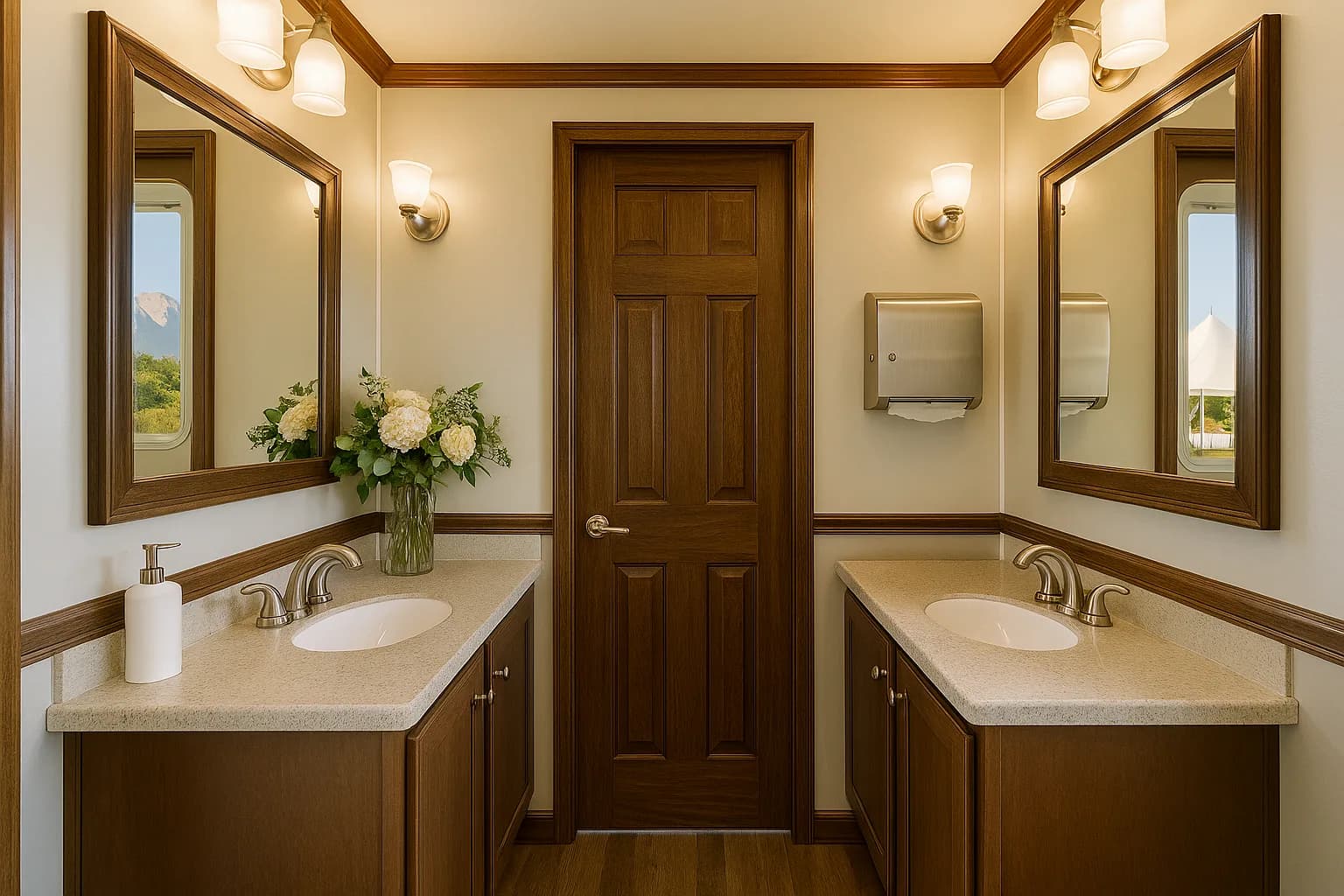
Colorado mountain weddings at ranch venues, ski resort event spaces, and backcountry meadows are one of the most in-demand use cases for mountain restroom trailers. These venues are chosen precisely because they lack permanent infrastructure — which means restroom trailers are essential, not optional.
- Book restroom trailers 4–6 months before peak season dates
- Confirm fresh-water tank and generator availability
- Verify road access before committing to a trailer
Festivals & Ski Resort Events
Colorado's ski resorts host major outdoor events year-round — summer food and wine festivals, music events on the mountain, trail races, and winter ski competitions. These events require portable restrooms at high altitude with all the access and weather considerations that entails.
- Coordinate early with ski resort event staff on delivery access routes
- Include ADA units — resort events often require ADA compliance
- Multi-day festivals require between-day servicing — confirm with provider
Construction & Development Projects
Mountain construction — luxury residential development in Aspen and Vail, resort infrastructure expansion, ski area improvements, and highway projects — requires OSHA-compliant portable sanitation on all active sites. Mountain construction has unique requirements beyond Front Range job sites.
Winterized units
Heated enclosures or insulated tanks prevent freezing at high altitude. Essential for cold-season construction above 7,000 feet.
Compressed construction season
Above 9,000 feet, the accessible construction season may run only May–October. Plan long-term contracts around weather windows.
Road access logistics
Mountain construction sites often have restricted access in spring due to mud season. Confirm delivery windows with site supervisors.
OSHA compliance
Same federal standards apply at any elevation. 1 unit per 20 workers on a 40-hour week. See the OSHA requirements guide for details.
Trail Races & Outdoor Recreation
Colorado's mountain trail running, mountain biking, and ultra-endurance event circuit is among the most active in the country. Trail races at altitude require units at start/finish areas and key aid stations along the course. Remote course placements may require hand delivery rather than truck delivery for isolated locations. Provide GPS coordinates and full course maps when requesting quotes.
Access & Delivery Logistics
Mountain delivery logistics are the most common source of problems for first-time mountain portable restroom rentals. These questions should be addressed before you confirm a booking.
What is the road surface, width, and grade at your venue?
Standard porta potty delivery trucks need a road at least 10–12 feet wide and passable to a medium-duty vehicle. Restroom trailers require wider access and a relatively flat placement area. Steep switchbacks, unpaved sections in poor condition, and narrow bridges can prevent delivery.
Is the site accessible by GPS/map? Share coordinates.
Mountain venues and construction sites often don't have clear addresses. Provide GPS coordinates, a satellite map link, and a description of the access road when requesting a mountain delivery quote.
What utilities are available at the site?
Restroom trailers require water and power. Confirm whether the venue has an outdoor water hookup and an electrical connection or generator access. Remote sites may need a fresh-water tank and generator included in the quote.
What is the weather like at your venue during the event?
Describe average conditions for your event date — altitude, typical afternoon weather, temperature range. Your provider will advise on whether climate control is essential and whether units need anchoring at your specific site.
Are there seasonal access restrictions?
Some mountain roads are closed in winter, restricted during mud season (typically April–May above 9,000 feet), or gated for private property. Confirm the provider can access the site during your delivery and service windows.
Mountain Booking Guide
Standard event (mountain)
6–10 weeks ahead
Earlier if during peak summer season or holiday weekends
Mountain weddings (restroom trailer)
3–6 months ahead
Some popular dates in Aspen/Vail book in winter for the following summer
Construction project
1–2 weeks ahead
Mountain providers often accommodate construction on shorter timelines than event work
Cost Overview
Mountain rental prices reflect delivery distance, limited competition, and higher service costs. These ranges are estimates — actual pricing varies significantly by provider and specific location.
| Unit Type | Front Range | Mountain |
|---|---|---|
| Standard porta potty (weekly) | Quoted per unit, per week | Varies — ask provider |
| Standard porta potty (event, 1 day) | Quoted per unit, per event | Varies — ask provider |
| ADA accessible unit (weekly) | Usually priced above a standard unit | Varies — ask provider |
| 2-station restroom trailer (event) | Well above portable units; quoted per event | Varies — ask provider |
| 4-station restroom trailer (event) | Above a 2-station; quoted per event | Varies — ask provider |
| Delivery/mountain surcharge | Included or small fee | Varies — ask provider |
Related Resources
Colorado Outdoor Wedding Restroom Rentals
Full guide to wedding restroom rentals in Colorado.
Restroom Trailer vs. Porta Potty in Colorado
Compare unit types for mountain events.
Restroom Trailer Rental Guide
Trailer types, utilities, capacity, and costs.
Colorado Construction Porta Potty Requirements
OSHA rules and mountain job site planning.
Colorado Porta Potty Rental Cost
Pricing across Front Range and mountain markets.
Colorado Restroom Trailer Rental Cost
Statewide trailer pricing factors, including mountain delivery.
How Many Porta Potties Do I Need?
Capacity formulas for events and construction.
Mountain Location Pages
Browse all Colorado locations →Related Mountain Town Rental Guides
Telluride, CO
Porta potty and restroom trailer rentals for Telluride festivals, weddings, and construction.
Estes Park, CO
Portable toilet providers for Estes Park events and Rocky Mountain National Park gateway venues.
Frisco, CO
Portable restroom rentals for Frisco events and Summit County job sites.
Breckenridge, CO
Porta potty and restroom trailer providers for Breckenridge events and construction.
Vail, CO
Portable toilet providers serving Vail resort events, weddings, and job sites.
Aspen, CO
Restroom trailer and portable toilet rentals for Aspen events and destination weddings.
Steamboat Springs, CO
Portable restroom providers for Steamboat Springs outdoor events and construction.
Glenwood Springs, CO
Portable toilet rentals for Glenwood Springs events and I-70 corridor construction.
Salida, CO
Portable restroom providers for Salida outdoor festivals and Arkansas River events.
Winter Porta Potty Rentals in Colorado
Planning guide for cold-season portable toilet rentals at high altitude.
Colorado Festival Portable Sanitation
Portable sanitation planning guide for Colorado outdoor festivals and large events.
Frequently Asked Questions
Need porta potties in a Colorado mountain town?
Compare providers serving Colorado mountain communities. Free quotes, no obligation.