
Houston Construction Porta Potty Rentals
Planning portable toilets for Houston and the Gulf Coast metro job sites: downtown towers with no spare ground, subdivisions in the fast-growing west and south suburbs, commercial and industrial builds, long summer heat, service-truck access, and right-of-way rules.
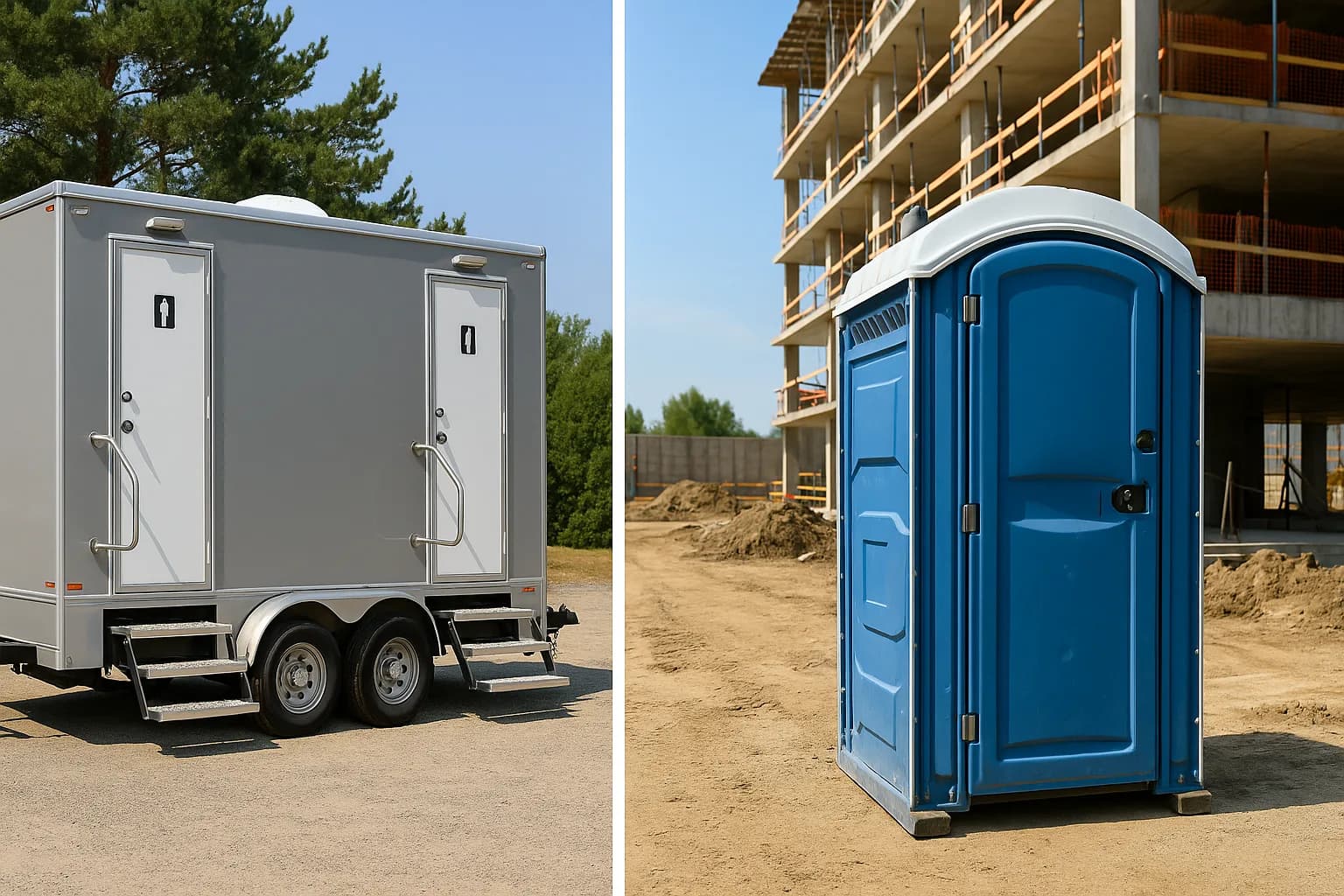
Quick Answer
Houston job sites follow federal OSHA rules, since Texas has no state plan for private employers: at least one toilet for 20 or fewer workers, scaling up with crew size, plus washing facilities. The planning work is mostly local. Downtown sites have little room and may need a City right-of-way permit if anything sits in the street or on the sidewalk. Suburban subdivisions run for months across several phases. Houston-area summers are long and hot, which affects how often units need service. Pricing and service policies vary by provider, so get quotes with your site address, crew size, and schedule.
Why Houston Job Sites Need Restroom Planning
Construction in the Houston area ranges from high-rise and mixed-use towers downtown to new subdivisions, commercial centers, and industrial buildings across Harris, Fort Bend, Montgomery, and Brazoria counties. The Census Bureau estimated Houston at about 2.3 million residents in recent years, and suburbs such as Sugar Land, The Woodlands, Pasadena, Katy, and Pearland keep adding residential, commercial, and industrial work. That activity keeps crews busy on every kind of site, and each one needs a sanitation plan.
Federal OSHA rules apply
Texas does not run its own OSHA State Plan, so private construction employers in Houston follow federal OSHA, including the construction sanitation standard, 29 CFR 1926.51.
Site types vary widely across the metro
A downtown tower, a new subdivision in Katy, and a tenant finish-out in Sugar Land call for different unit counts, placement, and service plans.
Summer is long
National Weather Service normals for Houston Intercontinental show summer average highs in the low to mid 90s. Heat and humidity affect how fast units fill up and how often they need service.
Access decides service
A unit the service truck can't reach doesn't get serviced. On crowded downtown sites and muddy subdivision lots, access planning matters as much as the unit count.
Who Rents Construction Porta Potties in Houston
General contractors on downtown and urban-core projects
High-rise, mixed-use, and institutional projects where staging space is limited and the restroom plan has to fit around cranes, hoists, and deliveries.
Homebuilders and subdivision developers
New-home communities in the northern and northeastern suburbs, where units move from phase to phase as streets and lots are built out.
Commercial and industrial contractors
Retail, office, warehouse, and manufacturing projects, including industrial corridors along the Ship Channel and commercial pads along I-10 and SH 288.
Remodelers and tenant finish-out crews
Interior work in established areas such as Pasadena and inside the Loop, where the building's own restrooms are off-limits or out of service.
Utility, roadway, and site-work crews
Crews working along corridors or across large undeveloped tracts, where units may need to move as the work advances.
Custom home builders
Single-lot builds on larger lots west and south of Houston and on larger lots in the suburbs, often on sloped or gated sites.
Downtown Houston vs. Suburban Job Sites
The biggest planning difference in this market is between dense urban sites and open suburban ones.
Downtown and urban-core sites
- Little or no open ground, so units compete with laydown areas, hoists, and delivery zones.
- Service trucks may not be able to pull onto the site, so plan where the truck will stop.
- Anything placed in the street, sidewalk, or the area behind the curb falls under the City's right-of-way rules.
- Dense downtown sites often need extra coordination for staging, deliveries, and where service trucks can stop.
- Tall structures may add units on upper floors as work moves up the building.
Suburban subdivisions and commercial pads
- Plenty of room, but early phases may have no paved streets, so access can turn to mud after rain.
- Long projects with changing crew sizes as work moves from site work to framing to finish-out.
- Units often need to move as phases open, so ask about relocation.
- Sites at the edge of the metro may sit farther from a provider's yard, which can affect delivery and service charges.
- Each suburb has its own city rules for anything placed on public property.
OSHA Requirements for Houston Job Sites
OSHA lists Texas as a state without an approved State Plan, so federal OSHA covers most private-sector workers in Houston. The construction sanitation standard, 29 CFR 1926.51, sets the minimum number of toilet facilities by crew size in its Table D-1:
| Number of employees | Minimum number of facilities |
|---|---|
| 20 or less | 1 |
| 20 or more | 1 toilet seat and 1 urinal per 40 workers |
| 200 or more | 1 toilet seat and 1 urinal per 50 workers |
This guide focuses on Houston logistics. For servicing, accessibility, and statewide jobsite conditions, see the Texas Construction Porta Potty Requirements guide.
Unit Types for Houston Job Sites
Standard construction porta potty
The default for most crews: a single unit with a holding tank, seat, and toilet paper. Many providers include hand sanitizer.
Hand wash station
A freestanding sink unit with its own fresh-water tank, placed next to the toilets or near a break area. Ask about tank size if the crew is large or the weather is hot.
ADA-accessible unit
A larger unit with grab bars and room to turn a wheelchair. Worth including when the site has public access, a permit calls for one, or a worker needs it.
Flushing or deluxe unit
A step up that some general contractors use near site offices or for client and inspector visits.
Crane-liftable or high-rise unit
Some providers offer units built to be lifted onto upper floors of a building under construction. Ask whether this is available and what the lifting plan requires.
Summer Heat and Service Planning
According to the National Weather Service Houston Intercontinental climate normals, summer average highs run in the low to mid 90s, with July and August among the hottest months. Gulf Coast humidity makes units feel worse between service visits. That is a long season for crews and for portable toilets.
Talk about service frequency before summer
Heat and heavy use make a unit unpleasant faster. Ask the provider what schedule they recommend for your crew size from late spring through early fall, and whether adding a visit or a unit makes more sense.
Use shade where the site has it
Placing units where they get some afternoon shade, or at least away from heat-reflecting surfaces, makes them more usable. Keep them on level, stable ground.
Plan hand wash water for summer
Crews use hand wash stations more in hot weather. Ask how often the provider refills fresh water and whether a larger tank is available.
Keep drinking water separate
OSHA requires an adequate supply of potable water on site. Hand wash station water is not a drinking water supply, so plan drinking water on its own.
Placement, Access & Right-of-Way Rules
If a porta potty has to sit in a street, sidewalk, or other public right-of-way in Houston, check with the City of Houston Permitting Center about which permit applies before delivery. Suburban cities and The Woodlands Township set their own rules for public property. The simplest approach is to keep units on private property inside the site.
Pick the spot before delivery day
Mark where units go on the site plan. Keep them close enough that the crew uses them, but out of traffic lanes, clear of equipment swing areas, and away from neighboring property lines and public frontage.
Keep a clear path for the service truck
A unit boxed in by material, dumpsters, or parked equipment can't be serviced. Leave a lane the truck can use on service day, or agree with the provider on where the truck will stop.
Plan for rain on unpaved sites
Subdivision lots without paved streets can become hard to reach after heavy rain. Place units where a truck can get to them in wet weather, and tell the provider about gates or access codes.
Anchor units where wind is a concern
Houston-area storms can bring strong gusts. Ask the provider about staking or tie-downs for units on open ground or upper floors.
Check suburban city rules separately
Sugar Land, The Woodlands, Pasadena, Katy, and Pearland set their own rules for anything placed on public property. Check with the city where the site is located.
Houston-area Suburb Planning Notes
Much of the region's portable-toilet demand sits outside downtown Houston: Fort Bend County suburbs, The Woodlands in Montgomery County, the Ship Channel industrial corridor in Pasadena, and fast-growing communities along I-10 and SH 288. Each place has different access, permit, and service planning details.
Sugar Land
A Fort Bend County city with commercial pads, residential work, and event venues such as Town Square, Constellation Field, and Crown Festival Park nearby. Census estimate about 107,700 in July 2025.
The Woodlands
An unincorporated CDP and Township primarily in Montgomery County (2020 Census 114,436). Town Center, Market Street, and surrounding communities mix commercial and residential construction; Township parks handle many public-space event reviews.
Pasadena
A large Harris County city along the Ship Channel industrial corridor. Industrial and commercial job sites often have gate access rules; park events follow City of Pasadena Parks and Recreation processes.
Katy
A fast-growing city at the Harris, Fort Bend, and Waller county junction. Census estimate about 28,400 for the City of Katy in July 2025, with substantial additional growth in the greater Katy area along I-10.
Pearland
A south Houston suburb mostly in Brazoria County. Census estimate about 129,900 in July 2025, with continued residential and commercial construction and an active Parks & Recreation special-event process.
Long-Term Rentals & Restroom Trailers
Many Houston projects run for months or years. A few things make long rentals easier to manage.
Phased subdivisions
Ask for terms that let you add or remove units as phases open and close, and keep the same service day so crews know when units will be cleaned.
Downtown towers
Expect the restroom plan to change as the building rises. Revisit placement when the site moves from excavation to structure to interiors.
Corridor and utility work
Ask about relocation service so units can follow the crew instead of being picked up and redelivered.
Site offices and client visits
Some general contractors add a restroom trailer near the site office on long commercial projects. Trailers need power and either a water hookup or a fresh-water tank, so plan those before delivery.
Cost Factors for Houston Construction Rentals
This guide doesn't list Houston-specific prices. Pricing varies by provider, and the Texas Porta Potty Rental Cost guide explains how quotes are built. The factors below tend to move the number on Houston-area job sites.
Request written quotes from more than one provider with your site address, crew size, schedule, and any access limits, and confirm what each quote includes before comparing them.
Houston Construction Porta Potty Providers
Planning restrooms for a Houston or Houston-area job site? Request free quotes and share your site address, crew size, and schedule so providers can confirm whether they cover your location.
Get Free QuotesHouston & Gulf Coast Coverage
Location pages for Houston and its west and south suburbs. Coverage varies by provider, so confirm delivery to your specific job site when requesting quotes.
Browse all Texas locations →Related Resources
Texas Construction Porta Potty Requirements
The statewide companion: OSHA baseline, crew sizing, servicing, accessibility, and Texas jobsite conditions.
Texas Porta Potty Rental Cost
Statewide pricing factors for standard portable toilets.
Texas Restroom Trailer Rental Cost
Trailer pricing factors for site offices and longer projects.
Construction Porta Potty Rentals
The national guide to job site portable toilets, unit types, and long-term rentals.
How Many Porta Potties Do I Need?
Crew-size formulas and OSHA unit counts for job sites and events.
ADA Portable Toilet Rentals
When an accessible unit is needed and what it includes.
Texas Hand Wash Station Rentals
What OSHA 1926.51(f) says about washing facilities, plus placement and servicing.
Houston Event Porta Potty Rentals
City of Houston event rules, unit counts, and suburb permit lead times.
Frequently Asked Questions
Need construction porta potty rentals in Houston?
Request free quotes for Houston and the Gulf Coast metro job sites, from downtown towers to suburban subdivisions.