
Grand Junction Construction Porta Potty Rentals
Portable toilet rentals for Grand Junction and Mesa County construction sites — OSHA-compliant units, weekly servicing, hand wash stations, and long-term contracts for residential builders, commercial contractors, roofers, and rural job sites across the Grand Valley and western Colorado.
Quick Answer
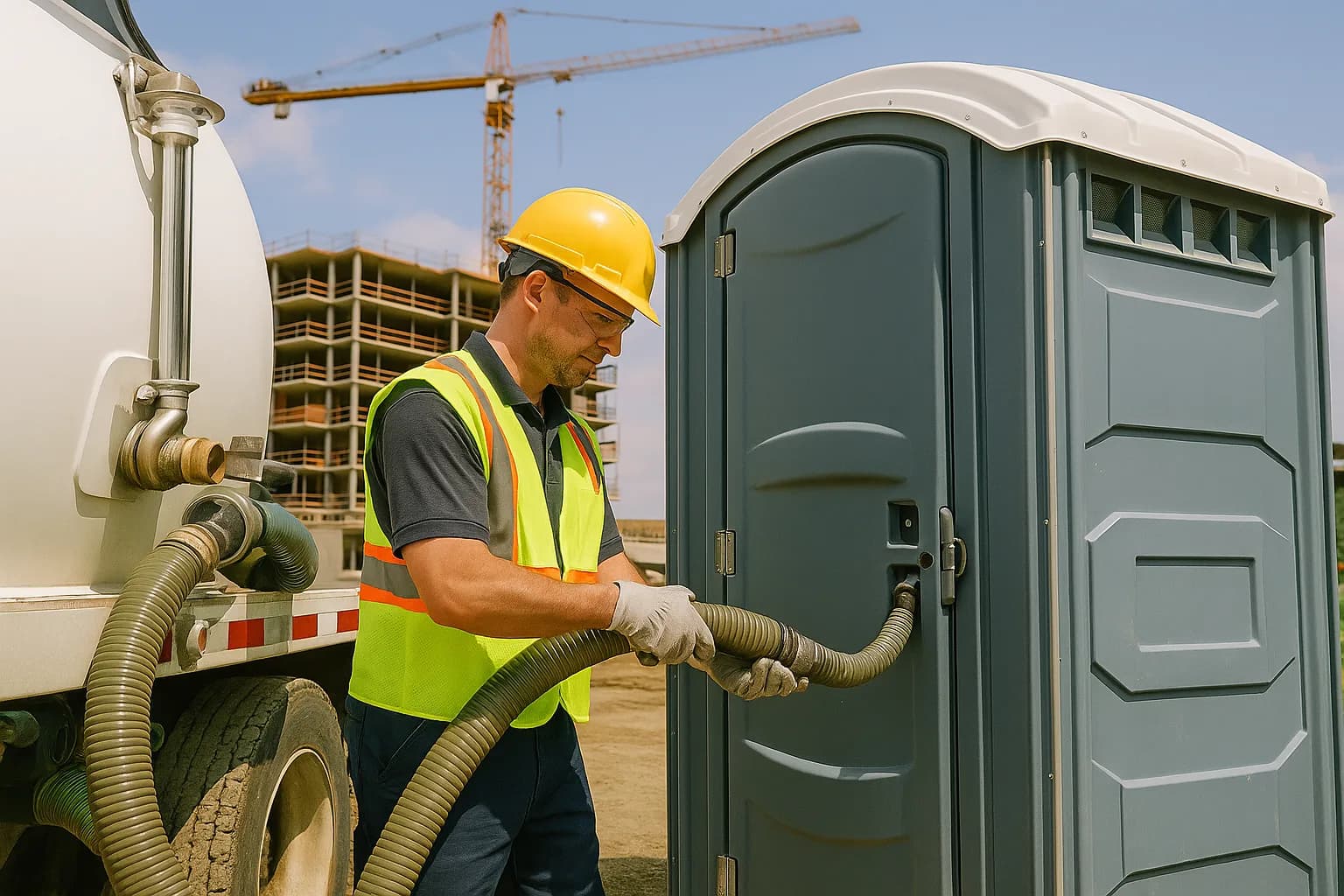
Grand Junction and Mesa County construction sites must meet OSHA sanitation minimums — 1 portable toilet for crews of 20 or fewer, scaling up from there. Weekly service is standard, though hot, dusty summer conditions may call for more frequent visits. OSHA 1926.51(f) calls for lavatories with running water, soap, and towels, so most job sites without plumbing add a hand wash station. Pricing is quoted per job. Providers based in Grand Junction cover the Grand Valley and much of Mesa County, including rural, agricultural, and energy-sector sites — rural delivery may carry an added fee, so confirm coverage for outlying locations when requesting quotes.
Why Grand Junction Job Sites Need Portable Restroom Planning
Grand Junction is the commercial and construction hub of western Colorado, anchoring a Mesa County market that spans residential subdivisions in the Grand Valley, commercial development along the city's growing retail corridors, agricultural and vineyard-support projects near Palisade, and longer-term energy-related site work across the broader region. Portable sanitation is both an OSHA requirement and a practical necessity across all of these project types.
OSHA requires it
Federal OSHA standard 29 CFR 1926.51 mandates sanitation facilities on all construction sites, regardless of how remote the site is. Mesa County permit conditions may add to the federal baseline on certain projects.
Grand Junction's market spans city and rural sites
Unlike a dense metro market, Grand Junction construction ranges from infill and subdivision work inside city limits to rural agricultural, ranch, and energy-related sites well outside the Grand Valley — each with different delivery and access needs.
High desert conditions add wear on units
Grand Junction's hot, dry summers and dusty job site conditions can accelerate wear on standard units and holding tank capacity compared to milder climates, which is worth factoring into your service schedule.
Long-distance service routes require planning ahead
Providers covering rural Mesa County, Fruita, Palisade, Clifton, and outlying areas are often running a wide territory on a single route. Booking ahead — especially for a new or hard-to-reach site — helps ensure your service day lines up with your project schedule.
Who Rents Construction Porta Potties in Grand Junction
Residential builders and subdivision developers
Builders working new-home construction and subdivision phases throughout the Grand Valley, where portable sanitation is a standard line item for the duration of the build-out.
General and commercial contractors
GCs managing commercial projects in and around Grand Junction — retail, office, and light industrial builds — who include sanitation in the site plan from groundbreaking through completion.
Roofers and exterior trades
Roofing and exterior remodel crews working residential and commercial properties across Mesa County who need units that can be delivered and picked up on a shorter project timeline.
Remodelers and renovation contractors
Interior and exterior remodelers working occupied or semi-occupied properties in Grand Junction where the building's own facilities aren't available to the crew during construction.
Agricultural and rural property projects
Property owners and contractors building or improving agricultural infrastructure, outbuildings, or rural residences across Mesa County, including areas near Palisade's orchard and vineyard land.
Energy and infrastructure crews
Crews working longer-duration rural and remote site work across western Colorado, where portable restrooms are often the only sanitation option for the length of the project.
OSHA Requirements & Crew Size Planning
OSHA 29 CFR 1926.51 sets the federal minimum for every job site, including rural and remote Mesa County locations. Local permit conditions may add to this baseline — confirm your project's specific requirements with your permit coordinator.
| Crew Size | OSHA Minimum | Notes |
|---|---|---|
| 1–20 workers | 1 toilet | Minimum baseline — no urinal required |
| 21–200 workers | 1 toilet + 1 urinal per 40 workers | Scale up as crew grows |
| 200+ workers | 1 toilet + 1 urinal per 50 workers | Higher ratio; uncommon on most Grand Junction sites |
Unit Types for Grand Junction Job Sites
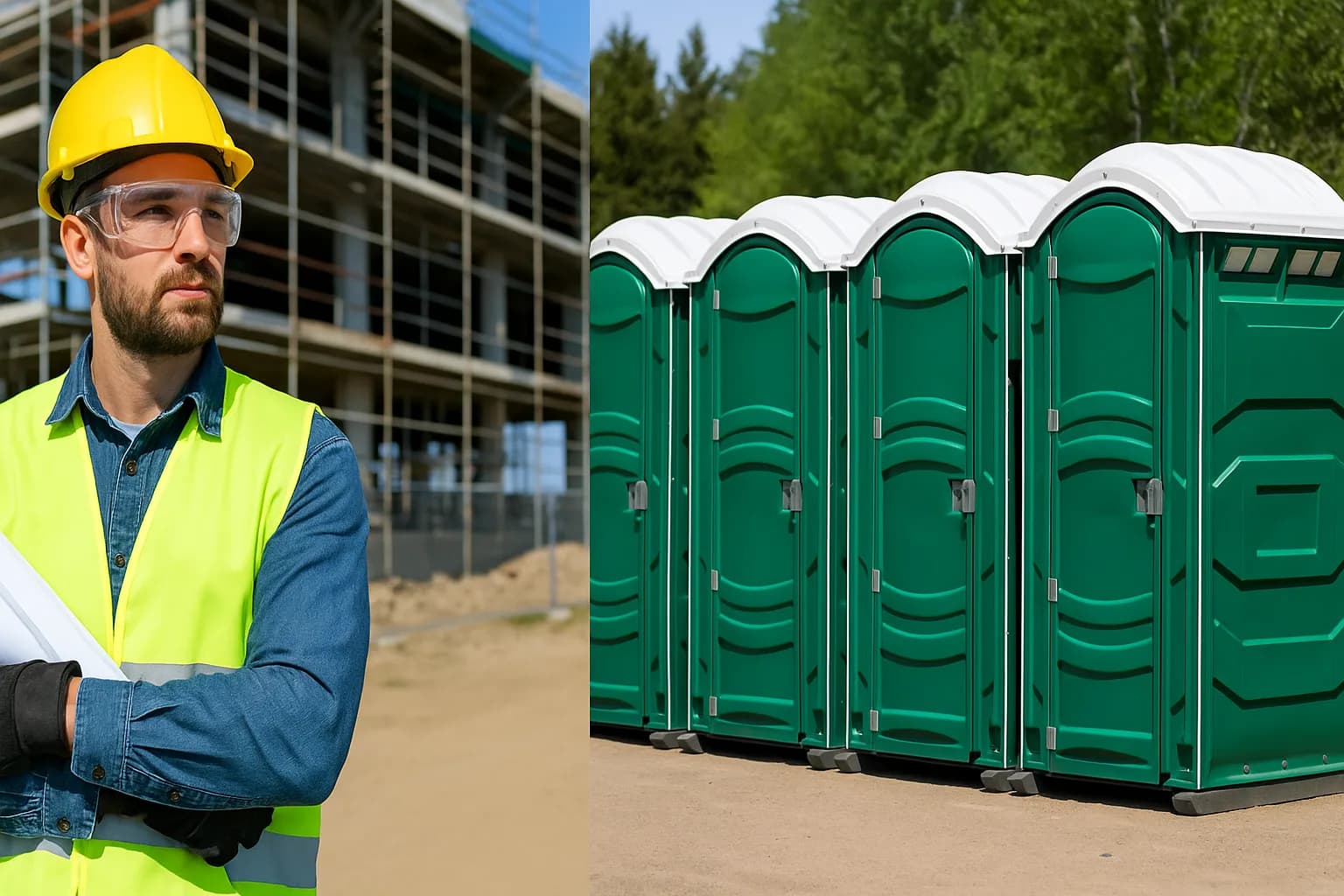
Standard construction porta potty
The default choice for most Grand Junction job sites. Single-unit plastic portable toilet with a holding tank, toilet seat, toilet paper, and hand sanitizer dispenser. OSHA-compliant and available from most Mesa County providers on weekly service contracts.
High-capacity or heavy-use units
Larger-capacity units for bigger crews or longer service intervals — useful for rural or remote Mesa County sites where a provider's route may not reach the location every week.
Deluxe / flushing porta potty
A step up for sites where the contractor or property owner wants a cleaner experience — includes a small water tank for a gravity flush and a built-in sink. Sometimes used on commercial sites with office staff or visiting subcontractors.
ADA-accessible portable restroom
Larger unit with interior handrails and accessible dimensions. Worth including on sites with public access or permit conditions that specify accessible facilities.
Standalone hand wash station
The common way to provide the washing facilities OSHA 1926.51(f) calls for on sites without plumbing. A freestanding hand wash station with its own water tank and pump dispenser, placed adjacent to the porta potty or near a separate work area.
Crane-liftable or specialty units
Specialty units designed to be lifted to upper floors of multi-story buildings are available in Colorado's larger metro markets, but they're less commonly stocked by Grand Junction-area providers given the market's lower-rise building profile. If your project needs one, ask early — it may require sourcing from a provider outside the immediate Grand Junction area.
Hand Wash Station Planning
Most Grand Junction and Mesa County job sites — including rural, agricultural, and outlying subdivision projects — don't have running water available to the crew, which is why a standalone hand wash station is the common way to provide the washing facilities OSHA 1926.51(f) calls for.
Placement
Hand wash stations are typically placed directly next to the porta potty, or at a separate location such as near a food or break area, tool staging zone, or site entrance — whichever makes sense for crew flow.
Servicing
Hand wash stations use their own fresh-water tank and are serviced on the same schedule as your porta potty — typically weekly. In hot, dusty conditions, crews tend to use these stations more, so ask your provider about refill frequency during peak summer months.
Rural and remote sites
On rural Mesa County sites without a nearby water source, a hand wash station with a larger built-in tank is worth requesting so it lasts between service visits, particularly if the site is on a longer delivery route.
Heat, Sun, Dust & Wind Considerations
Grand Junction's high desert climate — hot, dry summers, intense sun exposure, and periodic wind across the open Grand Valley — shapes how portable restrooms should be placed and serviced on local job sites.
Summer heat and sun exposure
Grand Junction summers regularly bring extended stretches of high heat and strong, direct sun. Where possible, position units in available shade or orient them to limit direct afternoon sun, and consider more frequent servicing during the hottest months.
Dust and dry-site conditions
Many Mesa County job sites — particularly new subdivision and rural sites before roads and landscaping are finished — have loose dirt and dust. Keep the path to the unit reasonably clear so it stays accessible for weekly service trucks.
Wind and unit placement
The open terrain of the Grand Valley can see periods of sustained wind, especially on exposed rural or agricultural sites. Ask your provider about placement on stable, level ground, and whether anchoring or tie-down is available for sites with limited windbreak.
Rental Duration & Service Scheduling
Weekly service is the standard for Grand Junction construction sites. Service includes pumping the holding tank, restocking supplies, and cleaning the interior.
Small residential crew (1–5 workers)
Weekly service is typically sufficient. For short-term projects (under 4 weeks), confirm if your provider has a minimum service commitment.
Active construction crew (6–20 workers)
Weekly service with standard chemical treatment. During Grand Junction's hot summer months, twice-weekly service can help keep conditions manageable for larger crews.
Rural or remote Mesa County site
Confirm your provider's route timing in advance — weekly service is still standard, but delivery day may be less flexible on longer rural routes.
Long-term or multi-phase project
Subdivision and phased commercial projects benefit from a flexible contract that allows you to add or reduce units as the project moves from site prep through finish work.
Placement, Access & Rural Service Logistics
In-town Grand Junction sites
Infill, subdivision, and commercial sites within Grand Junction city limits are typically straightforward — open staging areas and accessible roads make weekly delivery and service routine.
Fruita, Palisade, and Clifton area sites
Job sites in the Grand Valley's surrounding communities are within standard coverage for most Grand Junction-based providers, though confirm delivery timing since these routes add distance to a provider's schedule.
Rural and unfinished-road access
Agricultural properties, rural subdivisions before roads are paved, and remote Mesa County sites can have unfinished or gravel access roads. Confirm with your provider that their delivery truck can reach the site, especially after rain or snow.
Energy-sector and remote western Colorado sites
Longer-duration rural and energy-related project sites across Mesa County and the broader region typically need a provider with rural delivery experience and flexible service intervals suited to distance from Grand Junction.
Active site access and staging
Units must be placed where the service truck can reach them on service day. Keep the access path clear — a blocked unit can't be serviced, which creates both a compliance and a sanitation issue.
Cost Factors for Grand Junction Construction Rentals
| Item | How It's Priced |
|---|---|
| Standard construction porta potty | Quoted per unit, per week |
| ADA-accessible unit | Usually priced above a standard unit |
| Deluxe / flushing unit | Usually priced above a standard unit |
| Hand wash station | Usually quoted as an add-on |
| Additional service visit (beyond weekly) | Quoted per extra visit |
| Rural / outlying Mesa County delivery | Varies — ask provider |
Grand Junction Construction Porta Potty Providers
Looking to connect with portable toilet providers serving Grand Junction and Mesa County construction sites? Request free quotes and we'll help match you with providers covering the Grand Valley and surrounding western Colorado job sites.
Get Free QuotesGrand Junction & Western Colorado
Providers serving Grand Junction construction sites typically cover Fruita, Palisade, Clifton, Orchard Mesa, Redlands, Mack, Loma, and Whitewater, along with portions of Delta and Montrose counties and the I-70 corridor toward Glenwood Springs.
Browse all Colorado locations →Related Resources
Construction Porta Potty Rentals
National guide to job site portable toilets.
OSHA Porta Potty Requirements in Colorado
Federal minimums and Colorado context.
Colorado Construction Requirements
Local permit conditions and statewide rules.
How Many Porta Potties Do I Need?
Crew size formulas and OSHA unit counts.
Colorado Porta Potty Rental Cost
2025 pricing across Colorado markets.
ADA Portable Toilet Rentals
Accessible unit requirements and options.
Winter Porta Potty Rentals in Colorado
Cold-weather planning for job sites and freeze prevention.
Frequently Asked Questions
Need porta potty rentals for your Grand Junction job site?
Get free quotes from providers serving Grand Junction contractors, builders, and long-term job sites across Mesa County.